

Main

Science

November 10, 2011

Is genetic testing really worth the money?

Worried that your genes predispose you to developing diabetes or some other disease? Or maybe you’re just curious as to whether your DNA is going to give better-than-average chance of living past 90.  

For prices ranging from $200 to close to $1,000, that information can be yours in a matter of days, according to a growing number of genetic-testing companies now pushing their services online.

Sites such as 23andMe, FirstMark ONC, and Navigenics merely require a small saliva sample, advertsing that their results provide information about risk factors for up to 95 diseases and predicted responses to drugs.

The sites suggest that worried consumers will benefit through better understanding their health risks, leading them to smarter decisions and healthier lifestyles.

But, are they worth the money? Probably not, according to a recent study in the New England Journal of Medicine

Continue reading »

October 31, 2011

Why several small pleasures beat a few large ones

Researchers have found that the types of purchases we make, their size and frequency, and even the timing of that spending all affect long-term happiness.

One major finding is that spending money for an experience — like concert tickets, Spanish lessons, white water rafting — produces longer-lasting satisfaction than spending money on plain old stuff.

There are situations where having cash to spend helps, of course, including for those who become sick or disabled, another study found; for them, money matters. But that's a different kind of spending.

The enemy of happiness is adaptation, says Psyblog. Unfortunately we get used to things and they give us less pleasure; after a while we start taking them for granted.

Continue reading »

September 20, 2011

Drooling for dollars more than a simple expression: Study

It's not just your imagination. Thinking about money or fast cars does make your mouth water, says David Gal, an assistant professor of marketing at Northwestern University.

How much a person actually salivates while thinking about the good life seems to depend on their mindset at the time.

In a recent experiment, Gal randomly divided his subjects into two groups: one that felt powerless (they had to write essays about a time they had no control) and one that felt powerful (they wrote about being on top of their game).

When he exposed the subjects to various pictures, those shown pictures of money began to drool. This was especially true in those remembering the times they felt they weren’t really in control.

Continue reading »

September 12, 2011

Is being drunk ever an excuse for anything?

Whether it's an embarrassing text sent or breaking all those windows when the team loses the big one, it’s not hard to pinpoint something dumb you simply wouldn't do while sober.  

And while there are lots of myths as to how alcohol affects us and what to do about it, there's really only one question: Why do people do such stupid things when they’re drunk?

University of Missouri researchers have found alcohol dulls the brain signal that warns people when they’re making a mistake, ultimately reducing self-control.

Continue reading »

February 23, 2011

Does turning down the furnace at night actually pay off?

Energy conservation is not only good for the planet, it’s also good for your pocket.
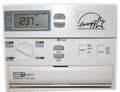
For instance, “is it more energy-efficient to maintain your thermostat setting at a constant temperature 24/7 during the winter at, say, 20 degrees, or to lower it at night to 18 degrees when you go to bed, but then have to heat up the house each morning back to 20?” a puzzled reader asks the Globe and Mail’s popular “Collected Wisdom” column.

The answer is a definite yes, of course: Heating the house in the morning from 18 to 20 degrees takes the same amount of energy as was saved the previous evening by not having the furnace operating while the temperature slowly dropped. In other words, heating the house upon waking is a free ride.

Continue reading »

February 14, 2011

Handling cash offers some relief from pain: study

Physically handling money works like a painkilling drug, maintains University of Minnesota researcher Kathleen Vohs.

In her study, Vohs had one group of subjects count cash and another slips of paper, ostensibly to test their dexterity in handling the notes.

Soon after, she asked all the subjects to dip their hands in very hot water and rate the pain they felt. Those who had just counted cash claimed that their pain was significantly less than those who counted the paper.

In a related study, cash counters who were later shunned by others while playing a computer game felt less excluded than those who counted the greenbacks.

Continue reading »

January 10, 2011

How to make your own luck

Over the past eight years, Ric Wallace has won thousands of dollars in various lotteries, as well as a dream home. You, too, can do the same, he believes.

And, for a price, he’ll tell you how through his Lotterysquirrel site, where you’ll find a host of betting schemes and talismans to help you score a big payday.

Bunk? I certainly think so.

What about the idea of creating your own luck though? Do some of us think and behave in ways that create good fortune in our lives?

Continue reading »

December 13, 2010

Desperate Canadian couples turn to foreign surrogate mothers

For infertile couples, miracle babies are the joy of a lifetime, but they often come with a hefty price tag. More affordable surrogate mother candidates are beginning to be found overseas, however.

At Kaival Hospital in Ananad, India, women are lining up to carry babies for Canadian couples at a fraction of the cost, skirting Canadian laws at the same time.

Six years after Canada outlawed the buying and selling of human eggs and sperm and the "renting" of women's wombs, a new international baby-making business is flourishing.

While Canada's assisted human reproduction act prohibits payment for surrogacy, it doesn't prohibit couples from going to foreign countries for surrogacy or other fertility-related services.

Continue reading »

October 05, 2010

Men more likely to cheat if they earn less than partner: study

Do men who cheat really outnumber their female counterparts? Is infidelity in marriage more natural to them?

It’s hard to say. Researchers suggest that men generally inflate their number of relationships and sexual partners, while women tend to be more reticent about the extent of any extramarital affairs.

But, if the polls are to be believed, men do stray more than women, and have affairs to avoid intimacy, recover their lost youth, or escape an unhappy marriage.

But a recent item goes one further, suggesting that it’s men who are economically dependent on their female partners that are more likely to wander outside the relationship. What's more, the results proved to be quite the opposite when gender and breadwinner roles were reversed.

Continue reading »

October 04, 2010

Hello, hello? Turning the tables on telemarketers

I’m pretty sure there’s a special corner of hell reserved for telemarketers.

Thanks to computerized dialers, cheap long distance rates and even cheaper third-world call centres, Canadians are getting more and more intrusive calls than ever before.

If eerie silence follows your greeting, it’s likely the caller is using “predictive dialing” technology, in which a computer dials multiple phone numbers over a short period in order to get a hit.

When you answer, you’re supposed to be quickly transferred to an available rep, but if all of them are occupied with other calls, you hear nothing – your first clue. Your last chance will be the annoying buzz of disembodied voices that precedes some garbled version of your name.

Continue reading »

advertisement

Gordon PowersGordon Powers

A long-time fund company executive, Gordon Powers now heads up the Affinity Group, a financial services consulting firm. Gordon was a personal finance columnist for the Globe & Mail for many years, has taught retirement planning...

Jason BucklandJason Buckland

The modern-day MC Hammer of money, Jason can often be seen spending cash that isn’t his with the efficiency of a Wilt Chamberlain first date. After cutting his teeth as a reporter for the Toronto Sun, he joined the MSN Money team with...